What Does Peripheral Neuropathy Feel Like?

Have you experienced pins and needles that had begun in your feet slowly worked its way up your legs? It may be hardly noticeable at first. You might shrug this off as nothing severe given that there is no discomfort to speak of in the beginning. What you do not see is what can injure you in the future. The muscles in your legs get information from the nerves outside the spine. These are called peripheral nerves. When these nerves are damaged, the muscles in your legs send defective details to the brain. The brain then indicates the muscles to compensate. This may not seem to be regrettable but what happens when the pain starts to end up being debilitating? What about when it starts to prevent sleep and requires medication?

At first, you are not worried about the possibility of falls, which can be devastating as we all aware of. The majority of cruelly, with or without pain, peripheral neuropathy
robs people of the things they enjoyed doing. What happens when people give up exercises like playing tennis or bike riding? Left unattended peripher neuropathy renders everyday easy activities such as strolling the pet difficult. With the loss of balance, walking without support is dangerous, stepping over the cat can be lethal, and picking up the grandchildren becomes a distant memory.

Price quotes of the variety of Americans with peripheral neuropathy vary, with the National Institutes of Health putting it at 30 million while the Foundation for Peripheral Neuropathy puts it at 40 million Americans. The Foundation for Peripheral Neuropathy has actually developed a research windows registry to compile information and biosamples on peripheral neuropathy clients, sets the average age of those with the disease at 63, though start typically goes unnoticed and undiagnosed for a number of years.

The most common medications recommended for neuropathy are anti-seizures and anti-convulsants medications. Lyrica is FDA authorized to treat diabetic neuropathy. There are possible negative effects to take into account, drowsiness, weight gain, dizziness, and queasiness. Anti-depressants are also authorized to deal with the pain associated with neuropathy. This would be Cymbalta which brings the threat of fatigue, drowsiness, and dizziness. So it would make good sense to question whether or not the remedy deserves the physical cost of dealing with neuropathy. Neuropathy can not be treated however can be helped.

Here are some things you can start doing immediately. B-Vitamins are a great beginning point. Many Americans lack B-Vitamins. You can ask your doctor which type to take, there are a number of to select from. If you smoke, stop immediately. Smoking cigarettes actually makes it harder to get adequate blood supply to the muscles and nerves in your legs. The legs figure predominately in cases of neuropathy. Warm baths will not just unwind the muscles however also promotes blood circulation. Workout, obviously, is shown to relieve a few of the discomfort connected with peripheral neuropathy. You should really start to exercise under the assistance of a physiotherapist. Your doctor can recommend a physical therapist.

If there is something to remove from this article is that you need to stay active. If you can no longer walk your pet dog because it injures to stroll it is important to restore that ability. Even if the pain is bad, work through the discomfort. Activities that bring you joy can help combat the psychological tiredness that may accompany the medications. Merely depending on medication is inadequate. You must advocate on your own and combat to keep doing what defines you as a person.
Suppose It Is Autonomic Neuropathy? How Would You Know?

Let’s begin by defining autonomic neuropathy. It is a type of peripheral neuropathy that impacts the non-voluntary, non-sensory nerve system like the internal organs. Such as the bladder muscles, the cardiovascular system, the gastrointestinal system, and the genital organs. These organs are not under an individuals manage, they act automatically but we call them autonomic. The nerve packages managing these organs are located outside the spinal column and are therefore considered peripheral nerves. The population most frequently impacted by autonomic neuropathy are people with longstanding diabetes mellitus type 1 and 2. Here is where the trouble comes in. The diabetic population undergoes numerous co-morbidities. Diabetic patients with neuropathic discomfort and feeling numb of the feet can easily inform their physicians what they are feeling. With Autonomic Neuropathy it is not rather as easy since they can not feel anything. The organs affected are cut off or are obstructed from efficiently interacting with the brain.

So what are some of the signs of autonomic neuropathy that you should be interested in? They are incredibly crucial to be familiar with particularly if you have diabetes. Some diabetics lose the capability to determine hypoglycemia, another term for low blood sugar level. That is actually unsafe due to the fact that if blood glucose drops they can fall under a diabetic coma. The other location of significance worrying autonomic neuropathy remains in heart rate and blood pressure modifications.

When the nerves connecting the heart and brain are compromised you may not know that you are having a cardiac arrest. On the milder side, You might feel light-headed or faint when you stand from lying down or sitting, or when you do physical activity. Here is another sign to be aware of, gastroparesis. Gastroparesis is a condition that slows or stops the movement of food from your stomach to your little intestine.

So as you can see autonomic neuropathy is a major problem. When you have health issue and don’t know if there are serious complications. I believe the genuine remove here is that if you are diabetic you really require to follow your physician’s orders to avoid more health complications. This type of neuropathy threatens because there is an intrinsic lack of symptoms. Diabetics have lessened health, to begin with. We all depend on signs to assist us seek assistance from our doctors. I think it is painfully apparent why autonomic Neuropathy is potentially unsafe.

What Is The Service Life Of Cbd And Cbd Oil?

How long is CBD good for?

Just like any type of other packaged item CBD oil or CBD often tends to have a specified shelf life. Quality cbd oil has a much longer rack life. Currently there is a factor why leading brand names offering CBD oil usage costly product packaging, and that reason is to extend its shelf life. CBD oil saved in blue dropper bottles or brownish-yellow bottles last long due to the fact that it secures the oil from exposure to light, air, and also warm, which stops the break down of the terpenes and cannabinoids.

The rack life of the CBD oil you buy all hinges on the high quality of the product, exactly how it is packaged, and ultimately exactly how you save it.

Just like any other packaged item CBD oil or CBD tends to have a specified life span. However, unlike other products, the life span of CBD items varies. That’s why addressing this concern isn’t very easy. That stated, normally speaking, the short answer is that it lasts for an average of 2 years or 24 months. Yet it is possible to extend the shelf life of CBD oil by a couple of more months if not years with appropriate storage.

Taking great care of CBD items, in general, aids to preserve their cannabinoids too as well as high quality. Whether you are using pure oil, capsules, or focus you’ll intend to see to it that the item isn’t exposed to the elements a whole lot. That said, there are other things that factor right into the life span of CBD oil.

High Quality Results Service Life

Quality CBD oil has a longer life span. The higher the high quality of your item the longer it will certainly last. Here the high quality of the hemp from which the CBD is stemmed from issues along with the technique utilized to extract the oil. Oil extracted from high-quality hemp utilizing modern extraction techniques like CARBON DIOXIDE will certainly produce a longer shelf life.

Quality of the Product packaging

Now there is a reason leading brand names selling CBD oil use costly product packaging, and that reason is to prolong its life span. Cheaper brands skimp on the product packaging to conserve cash, but that usually means that customers have a shorter shelf life to manage. CBD oil kept in blue dropper containers or amber bottles last long since it protects the oil from direct exposure to light, air, and warmth, which protects against the malfunction of the terpenes and cannabinoids.

Storage space Techniques

We stated above that exposure to air, warmth, and light will play a significant function in the life span of your CBD oil. That’s why it is equally as important to make certain that the oil is kept appropriately. To prolong the shelf life of your CBD oil it is best to maintain it in a cool, dark area away from all the elements. Doing this will make sure that the oil stays fresh for a very long time. Regardless of the top quality, if it isn’t stored well, the oil will not last long.

Verdict

The service life of the CBD oil you purchase all rest on the high quality of the item, exactly how it is packaged, and also finally exactly how you store it. If all things are done properly you’re checking out as much as 3 years of service life. That claimed, if you freeze the oil, that can suggest that it lasts even longer.

While CBD oil can do marvels for your wellness, it is crucial to buy high quality oil offered by a reputed vendor. If you do that, not only will you take advantage of its usage, but be assured of its beautiful substantial life span.

The Keys To Living A Healthier Lifestyle – Make The Change

It is not uncommon for individuals to reach a point where they feel some changes are necessary. More specifically, they realize how important it is to start making some healthier choices. Because not only will these choices influence their quality of life right now,
but it will dictate how much they will enjoy their old age.

If you realized a change is necessary, congratulations. And now you can really start appreciating what life has to offer. But where do you start this new journey?

The Keys To A Healthier Lifestyle

You will be happy to know that the keys to a healthier lifestyle are not complex or even expensive. Instead, they are basics steps you can take at your own comfortable pace. So, let’s not waste any more of your precious time.

Get Active

You might hate hearing this, but you can’t enjoy a healthier lifestyle if you don’t get that blood pumping through your veins every now and again. However, this doesn’t mean becoming a gym zombie. As mentioned, you can take small steps toward a healthier lifestyle – literally. A brisk walk for 30 minutes a day can do
wonders for your mind, body, and soul.

Make Healthier Diet Choices

The food you consume is going to influence how you think, your production levels, your mood, your weight, and even your energy. But for some reason, people choose to avoid all these important factors, especially when they indulge the wrong meals every day. And to make things worse, people adopt bad habits.

For instance, take out once a week eventually turns into 3 times a week, if not more. Why? Because it is just so convenient and affordable. The point is to pay attention to the food you consume, otherwise, you will not enjoy a healthy life.

Mindful Eating

Just eating at a slower pace can dramatically influence how much you eat in one sitting. Yes, it’s pretty amazing when you think about how unnecessary the portions typically are. Even at the turn of the 19th century some brilliant individuals believed people ate too much, too fast. Well, if you want to cut your
portions in half without feeling like you are starving yourself, slow down the pace and take more bites.

Decompress And Break Down Stress

Stress is one of the most dangerous things in terms of maintaining a healthier lifestyle. And even if you use all the keys mentioned above, you have to put effort into keeping it out of your life. Meditate, yoga, exercise, try anything healthy to rid you of stress.

Get Enough Sleep

The last key is to get the necessary sleep. If you don’t give your body regular and quality time to heal, you can’t expect it to support a healthier lifestyle down the road. Sleeping is a critical part of healthy living, and the quicker you get into a routine the better. These are several options you have to help make
your life better. What are you going to do with them?

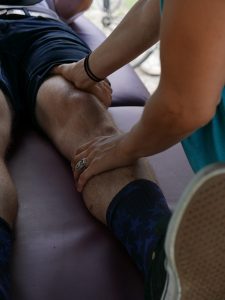
Learn about Knee Therapy

Your knee has a cushion between the shinbone and thighbone known as a meniscus. The meniscus is prone to wear and tear and when it is torn it can be the source tremendous pain. At times the knee can lick and at times nothing happens but in case it does there will be need for therapeutic treatment.

In a youngish person, when a knee-wrenching activity like skiing, ultimate Frisbee, or slipping on the ice tears a meniscus, the damage is often repaired surgically. But a torn meniscus is often seen in the 9 million Americans with knee osteoarthritis, and for them the best course of action hasn’t been crystal clear. Results of the Meniscal Tear in Osteoarthritis Research (MeTeOR) trial published yesterday in the New England Journal of Medicine indicate that physical therapy may be just as good as surgery.

Meniscus tear2
When the shock-absorbing cartilage in the knee is torn by injury or worn ragged by use, the result is called a meniscal tear. Stiffness and a vague sensation that the knee is not moving properly often result.
Surgeons at Harvard-affiliated Brigham and Women’s Hospital and six other large hospitals recruited 351 men and women with symptom-causing knee osteoarthritis and a meniscal tear. Half completed a six-week physical therapy program aimed at easing inflammation, strengthening muscles supporting the knee, and improving the knee’s range of motion. The other half underwent a procedure called arthroscopic partial meniscectomy, in which unstable pieces of the meniscus are removed and the remaining edges are smoothed, followed by the same physical therapy program.

Participants in both groups reported similar improvements in knee function and pain at six and 12 months. About one-third of those who received only physical therapy “crossed over” during the course of the trial and had surgery.

Sourced from: http://www.health.harvard.edu/blog/physical-therapy-works-as-well-as-surgery-for-some-with-torn-knee-cartilage-201303206002

Even though you might be in pain there are situations where your pain is bearable. You can actually engage in some exercises that will help you heal your knee. One of these exercises is strengthening the butt and the other is stretching the muscles that support your knees.

  1. STRENGTHEN YOUR BUTTWe know from research that knee injuries, including common Anterior Cruciate Ligament (ACL) tears, can occur when large hip muscles are weak. ACL tears, which are eight times more likely in women athletes, have been shown to lead to other cartilage tears and are correlated with knee arthritis later in life.

    As a society, our butt muscles are weak. When the main butt muscle (gluteus maximus) is weak, it causes the pelvis to drop and the upper thigh bone (femur) to fall inward. This imbalance creates painful downward stress on the hip, knee, and ankle every time you take a step.

    Hip extensions are helpful exercises to strengthen the glutes. Learn why and how to properly do hip extensions in both standing and prone position in this clip from the Strong Knees DVD.

    2. STRETCH THE MUSCLES THAT SUPPORT YOUR KNEES

    When butt muscles atrophy or become imbalanced because we sit so much of the day, the hamstrings and hip adductors (inner thigh muscles) also overwork — to compensate for the underdeveloped gluteus maximus — resulting in compressive force on the knee joint. By stretching out these support muscles, you decrease the chance that they’ll get tight and cause muscle imbalances. So remember the complementary two-fold process: as you strengthen naturally weak muscles like the glutes, also stretch supporting muscles like the inner thigh muscles.

    Sourced from:http://www.gaiam.com/discover/175/article/best-ways-ease-knee-pain-5-tips-physical-therapist/

At times knee injuries get serious and they cannot go away no matter the amount of therapy. In such a case the only last resort is surgery. This is the resort when medication is no longer effective in alleviating the pain. Your doctor of course has to examine and also allow the orthopedic surgeon to do the same to determine if you need surgery and when.

Knee replacement may be an option when nonsurgical interventions such as medication, physical therapy, and the use of a cane or other walking aid no longer help alleviate the pain. Other possible signs include aching in the joint, followed by periods of relative relief; pain after extensive use; loss of mobility; joint stiffness after periods of inactivity or rest; and/or pain that seems to increase in humid weather.

Your primary-care doctor may refer you to an orthopedic surgeon who will help you determine when/if it’s time for knee surgery and which type of knee surgery is most appropriate. Your surgeon may decide that knee replacement surgery is not appropriate if you have an infection, do not have enough bone, or the bone is not strong enough to support an artificial knee.

Signs that it might be time for a knee replacement:

Your pain persists or recurs over time
Your knee aches during and after exercise
You’re no longer as mobile as you’d like to be
Medication and using a cane aren’t delivering enough relief
Your knee stiffens up from sitting in a car or a movie theater
You feel pain in rainy weather
The pain prevents you from sleeping
You feel a decrease in knee motion or the degree to which you’re able to bend your knee
Your knees are stiff or swollen
You have difficulty walking or climbing stairs
You have difficulty getting in and out of chairs and bathtubs
You experience morning stiffness that typically lasts less than 30 minutes (as opposed to stiffness lasting longer than 45 minutes, a sign of an inflammatory condition called rheumatoid arthritis)
You feel a “grating” of your joint
You’ve had a previous injury to the anterior cruciate ligament (ACL) of your knee

Sourced from: http://www.zimmer.com/patients-caregivers/article/knee/who-needs-knee-surgery.html